

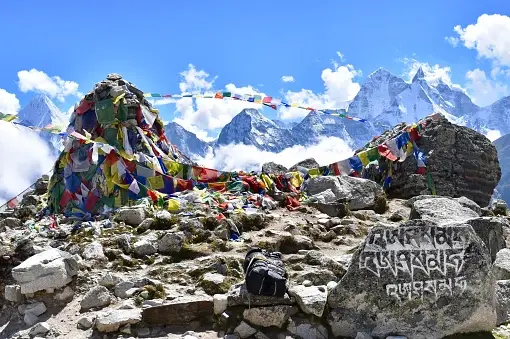
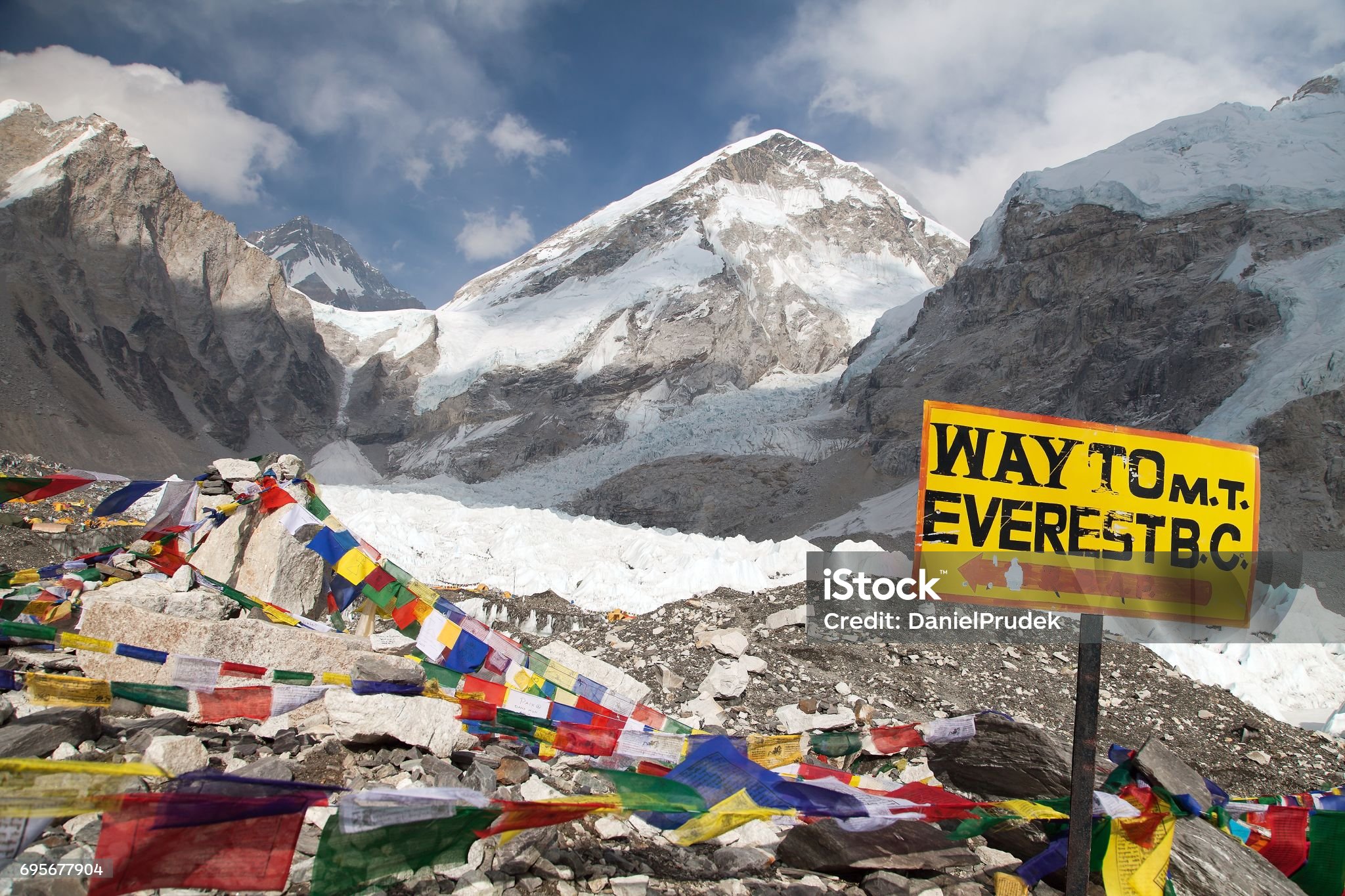
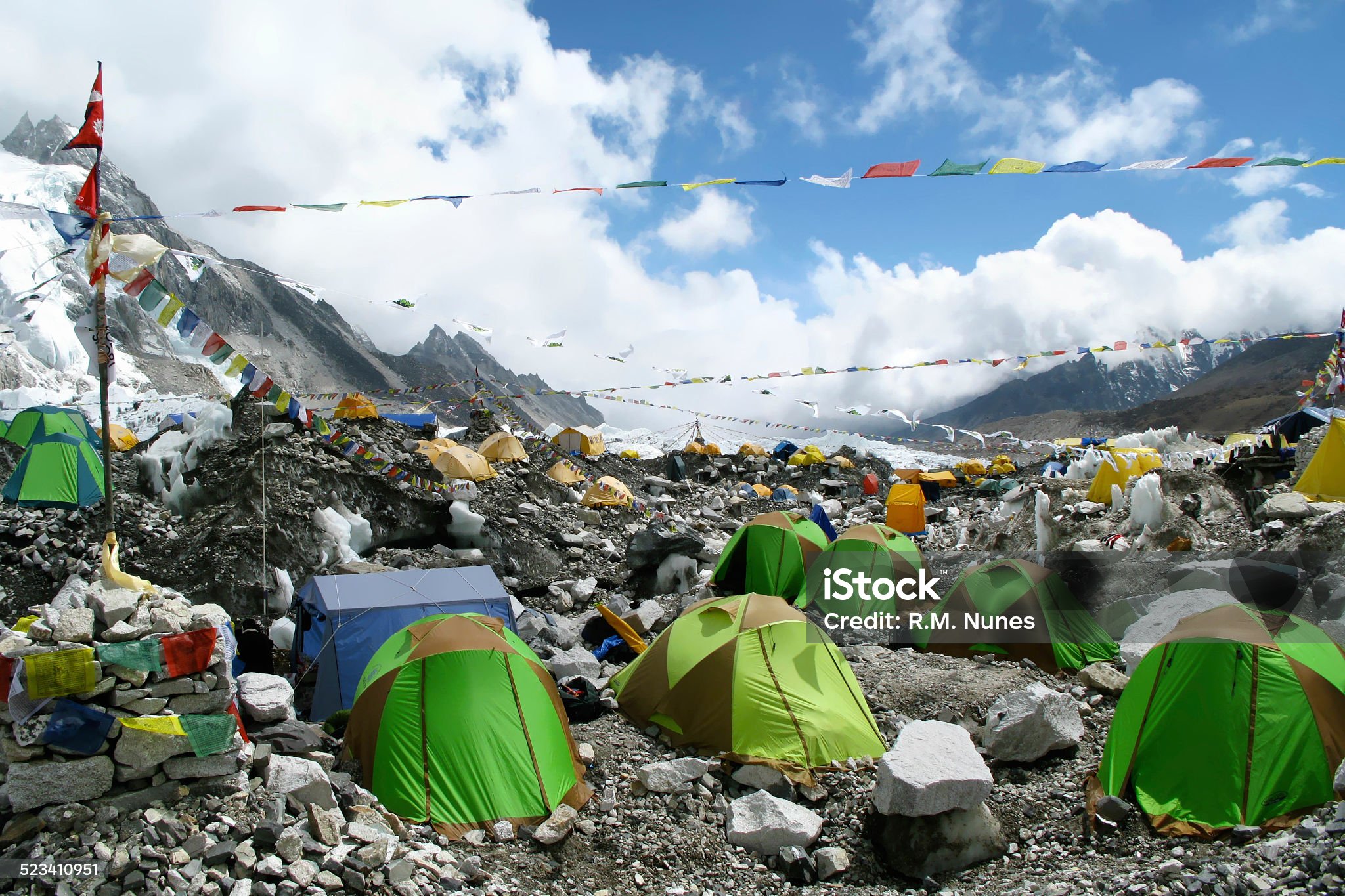
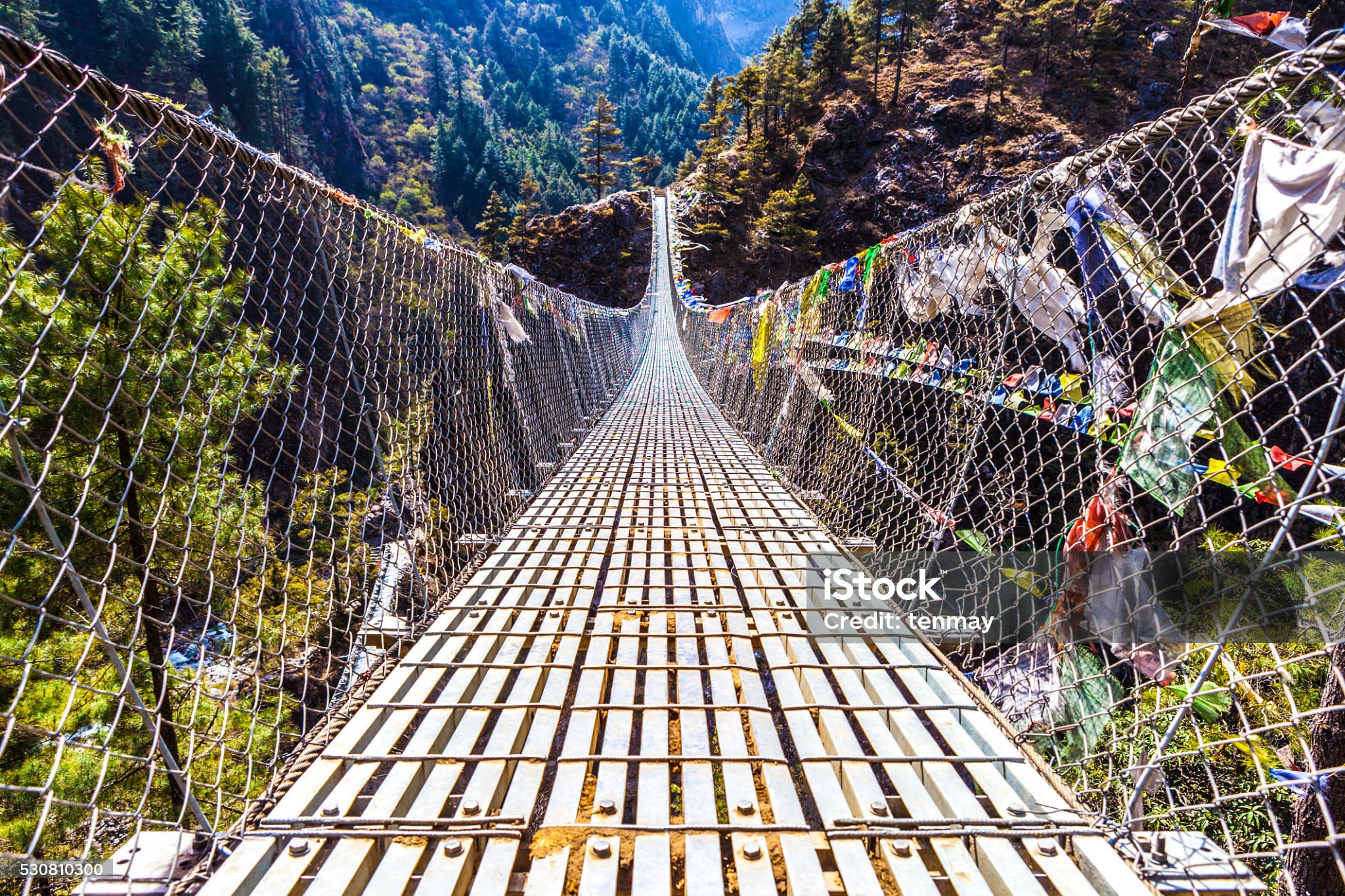
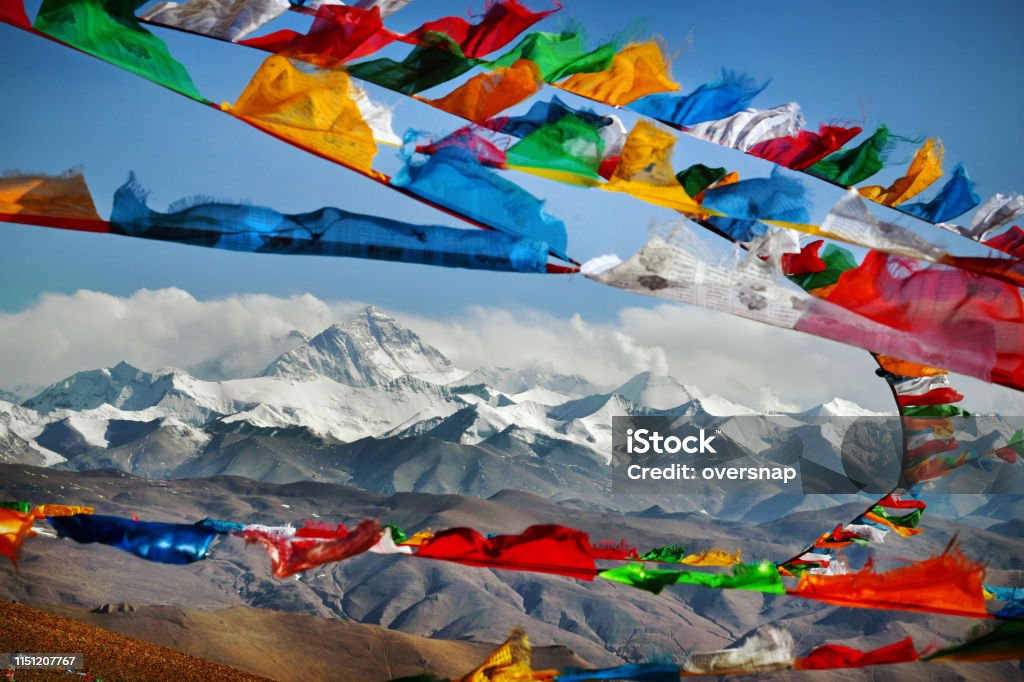
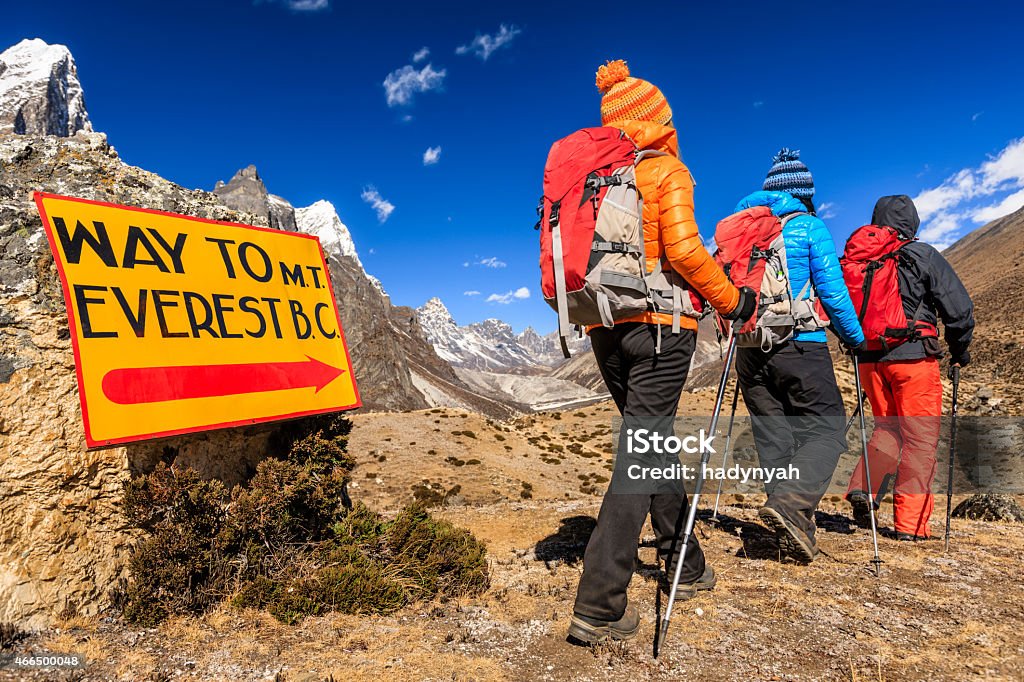
Everest Base Camp trek is quite simply the classic trek in Nepal. High in the priority list of trekkers, the Everest Base Camp is one of the most visited regions in the Himalaya. The two week trek starts and finishes at Lukla, an airstrip to the south of the region also known as the ‘Gateway to Everest’. Most trekkers fly to Lukla, to begin the trek.
Starting from Lukla, a gentle two-day trek up the Dudh Koshi valley leads to the famous Namche Bazaar. The route has an abundance of tea houses. Phakding and Monjo are the popular stopovers on the first day and just beyond Monjo is the entrance to the Sagarmatha National Park at Jorsale check point where permits are checked. The trail that followed the Dudh Koshi River starts going uphill from the suspension bridge just a few minutes from Jorsale and Namche Bazaar is reached after a 3 hour hike.
It is good to halt here for a few days to acclimatize by walking in the surroundings of Namche as it can’t be done in a hurry. A visit to Syangboche or some Sherpa villages such as Thame, Khumjung and Khunde just a few hours walk from Namche are good options for a hike to while away your time.
Leaving Namche Bazaar, the trail follows the valley of Imja Khola with spectacular views of Thamserku, Kangtega and Ama Dablam mountains, while dominating the skyline ahead are the giants, Lhotse and Everest. The most common night halt after Namche is at the top of a steep climb from the Imja Khola at Tengboche. The Tengboche Monastery is one of the most famous monasteries, probably because of its unrivalled backdrop, Mt. Ama Dablam.
Following the Imja Khola from Tengboche, the trail ascends through Pangboche until Pheriche or Dingboche is reached, where the day’s trek ends. Another day of acclimatization follows with a fascinating side trip to Chhukung which is about a 3 hour walk from Dingboche.
From Dingboche or Pheriche a 6 hour walk leads to Lobuche which sits on the lateral moraine of the Khumbu glacier. What follows is a roughly 3 hour hike from Lobuche to the last settlement on the trail known as Gorak Shep. The few tea houses at this place provide shelter for the night before one undertakes the final leg of the trek over the glacier to Everest Base Camp.
Above Gorak Shep is seen the popular view point known as Kala Patthar, from where many a trekker has captured the image of the world’s highest mountain and gazed up in awe. The trek along the glacier to base camp can take up to five hours. This is treacherous ground and one must walk through this area cautiously, as finding a route can be tricky and there’s always the risk of falling on the slippery ice. Being at Everest Base Camp is an out of this world experience.
SAGARMATHA NATIONAL PARK
Sagarmatha National Park is home to the highest peak in the world – Mt. Everest (8,848 m), Sagarmatha being the Nepali name for Everest. The area was designated a national park in 1976 and encompasses several other peaks all above 6,000 m. The park got recognition as a World Heritage Site in 1979.
With most of the park lying above 3,000 m, it is mostly rugged terrain made up of deep gorges, glaciers and massive rocks. The Park boasts of a wide variety of wildlife including more than 118 species of birds. While the forest is dominated by silver fir, birch, rhododendron and juniper trees, animals such as musk deer, the Himalayan tahr, the ghoral, the serow, the wolf, and the Himalayan black bear may be spotted by trekkers in this region.
Endangered species which are rarely seen include: snow leopard, red panda, and two kinds of dazzling pheasants – the crimson-horned and the Impeyan, Nepal’s national bird. Smaller animals like marmots, pikas and martens are also found in the park.
The region ranges in altitude from less than 2,000 m above sea level at Jiri to the high peaks of the Himalaya at over 8,000 m. Hence the park’s flora and fauna is diverse with dense forest of pine, oak and the flowering rhododendrons found up to 4,000 m above sea level. The latter are one reason to make a trip to Nepal in the spring when the hills between 2,000 m and 3,500 m are a riot of colors.
The Everest Base Camp Trekking (EBC Trek) is the most beautiful trail in the Everest Region and is indeed the most famous Himalayan Trek. Everest Base Camp Trek is famous for its spectacular mountain views and hospitality of its inhabitants, the Sherpa people. Mount Everest is also known as Sagarmatha in Nepalese language, which in English literally means “Mother Goddess of the World”.
The Everest Base Camp Trek begins with a short flight to Lukla from Kathmandu. Upon landing at the Lukla airport, which is one of the highest-located airports in the world, you can immediately feel the change in the environment. The Himalayan breeze coruscates down the peaks and brushes the hills with a refreshingly chilly patina. The trekking trail then branches off towards various ethnic Sherpa settlements and villages before finally concluding at the base camp of the world’s tallest Himalayan peak.
The trek strat from Lukla after the 30 min flight. On the way there are many tea houses in which you can stay and eat locally as well as Western food. The trail takes one through the green Dudhkosi Valley, which is rich in Flora and Fauna, Sherpa Villages, and Buddhist Monasteries. It leads one up to the legendary Sherpa village of Namche Bazaar where you spend two nights exploring and acclimating, an important factor for your safety and enjoy experience the Everest Base Camp trekking. Then you follow the trail to the villages of Tengboche, Pangboche, Dingboche, and Lobuche where Yaks can be seen grazing in the high meadows. Finally you reach the last human settlement, the village of Gorakshep, which is just two hours from Everest Base Camp. From here, you can see the Khumbu Ice Fall and interact with other mountaineers climbing the Everest. From Gorakshep your trail takes you to Kalapathar from where you have the best possible view of the Himalayan Range. This is your turn around point and you descend following the same trail with still more splendid, fascinating and breathtaking views that leaves you with a lifetime of wonderful memories.
Everest Base Camp trekking offers a unique experience with panoramic views of the world’s highest and most beautiful mountains. It is one of the most inspiring place in the world and trekking is possible all year round, but the best times to visit are March to May and September to December.
Is the Everest Base Camp Trek Difficult?
Everest Base Camp Trek is a moderate journey suitable for average people, so no previous trekking experienced is required. However, to get fit, we would recommend practicing regular cardio exercises in order to prepare for the trip. Exercises like running, jogging, walking or swimming all boost the stamina of the body, and can help you during the trip. Thus, for preparing for the trek, it would be our advice to do regular exercises.
We here at 8picktrek Team count ourselves as privileged that we get to witness the life-changing journey of so many travelers and be a part of their memories. With well-constructed itineraries, trained guides, and ample facilities we are sure of our capability to provide you everything you need in this incredible journey. Head up with us to explore the mesmerizing grandeur of the Himalayas for Everest Base Camp.
You will visit the renowned Himalayan town of Namche Bazaar- also known as the Gateway to Everest. It was an ancient trading point between the Himalayan traders and low-land merchants. Views of Peaks like the Thamserku, the Kongdi RI, the Ama Dablam, Lhotse Himal, the Nuptse Peak, and the Kusum Kanguru and of course- Mount Everest among many others from the town are utterly mesmerizing.
Likewise, as you trek through the Dudh Koshi and Imja River valleys, you also come to the village of Tengboche, which harbors the famous Tengboche Monastery- one of the largest and oldest Buddhist monasteries in the region. As you near the base camp. Kalapatthar presents panoramic views of the entire Mount Everest massif in a spectacular fashion. Treks to the vantage point occur in the early hours of dawn as the point is known for its sunrise view amidst the ivory Himalayan peaks.
Once your flight lands at the Tribhuvan International Airport in Kathmandu, the representative of Trekking Hub will greet you and escort you to the hotel. He will help you get through the check-in formalities and hands you the room key. After that, you’ll have the leisure time for the rest of the day. So, make good use of the leisure time, get proper rest, read some books, take a walk, and get rid of the jet lag.
Later in the evening, you’ll be attending a short briefing session with your trekking guide. Here, you’ll be joining the rest of the group members and getting along before the trek. In this session, your trekking guide will inform you basically everything about the trek. After the meeting, you’ll be sitting along with the rest of the group and enjoy the welcome dinner.
Highlights:
Pick up and greet at Tribhuvan International Airport
Transfer to hotel via a private transportation
Trekking guide briefing session
Meet and greet with the rest of the group
Enjoy the welcome dinner
Special Note:
We highly recommend you to attend the briefing session in the evening. It is because your trekking guide will provide you all the crucial information regarding Everest Base Camp Trek. Here, your trekking guide will talk about transportation, day-to-day lifestyle, difficulty, altitude sickness, accommodation, mountains, culture, food, etc. If you have any concern or query regarding the trek, do not hesitate to ask as many questions as you want. We expect these sessions to be as interactive as possible! Apart from that, you’ll also get to know all your group members before you head to the Himalayas.
Since you’ll be leaving for the trek early next morning, it is advisable to pack your bags and ready your gears before you go to sleep on this night. It helps to avoid the last-minute hassle in the morning.
Dinner
Hotel
Manthali to Lukla Flight (March, April, May, September, October and November)
During peak seasons, such as March, April, May, September, October and November the flight to Lukla will be operated from Ramechhap/Manthali due to air traffic expansion. The Manthali/Ramechhap airport is about a 5 to 6 hours drive away from Kathmandu. On this day, we wake up between 1:00 AM and 3:00 AM, take an escorted shuttle to Manthali Airport in a shared tourist vehicle, and board a 20-minute flight to Lukla.
Kathmandu to Lukla Flight (January, February, June, July, August and December)
The flight to Lukla is typically operated from Kathmandu during nonpeak seasons, which include January, February, June, July, August and December. Please be aware that the decision regarding the operation of flights solely depends on the airline and is influenced by the volume of travelers during a specific month. On this day, we wake up between 5:00 AM and 6:00 AM. Our staff will escort you to the domestic airport terminal in Kathmandu, where you will board a 35-minute flight to Lukla.
Helicopter Option
You have the option to book a direct helicopter flight from Kathmandu to Lukla for an extra charge of USD 550 per person. This price is quoted on a 5-people sharing basis. This is the best alternative to avoid the long drive to Manthali airport during peak season (March, April, May, October, and November).
Prepare your luggage for the trek the day before the flight. You will be arriving at the Tenzing Hillary Airport early in the morning. Breakfast in Lukla. Porters will meet the group in Lukla and are assigned to carry luggage. For every two clients, one porter is assigned.
Today we trek to Phakding. The trail is straightforward. We head out of Lukla and follow the Dudh Koshi River downhill. The route connects to the Namche Bazaar trail, just above Chaurikharka (2,713 m/8,900 ft). Continuing, we come across the small village of Ghat. After a brisk hike, we arrive at Phakding.
Max. Altitutde: Lukla (2,840 m), Phakding (2,610 m)
Duration: 35 min flight from ktm, 5-6 hrs drive & 20 min flight from Manthali, & 3-4 hrs trek
Overnight at a Guesthouse
Breakfast, Lunch, and Dinner included
On this day, you will walk through the pine forest, rustic villages, and occasional yak pastures. Once you leave Phakding, you will continue walking through the narrow trail alongside the Dudh Koshi River. Along the route, you’ll walk past several Sherpa villages, including Benkar and Chumoa, and cross a couple of suspension bridges to reach the entrance gate of Sagarmatha National Park at Monjo.
After entering the national park, the trail heads uphill toward the village of Jorsalle. You’ll continue walking as the first glimpse of Kusum Kanguru, Thamserku, Everest, and Nuptse unfolds on the backdrop.
The trail further leads to a steep climb from Jorsalle to reach the colorful village of Namche Bazaar. Namche Bazaar is surrounded by colorful markets, trekking shops, fancy restaurants, cafes, and local shops. It is regarded as the Sherpa Capital, and you’ll get to enjoy the close-up view of Kongde-Ri and Thamserku.
Highlights:
Cross over the thrilling suspension bridges
Enter Sagarmatha National Park
Majestic glimpses of Kusum Kanguru, Thamserku, Everest, and Nuptse
Walk along the bustling streets of Namche Bazaar.
Special Note:
Namche Bazaar is the most significant commercial hub of the Khumbu region. It is surrounded by markets, gear shops, grocery stores, restaurants, and cafes. If you’ve missed out on anything, from trekking gear to chocolate bars, you can get them all at Namche Bazaar.
6 hours
Breakfast, Lunch, Dinner
Teahouse
You’ll have a much-needed acclimatization day at Namche Bazaar. It is significant to have a leisure day to acclimatize with the increasing elevation and minimize the possibilities of altitude sickness.
On this day, you’ll hike to the beautiful village of Khumjung to keep your feet moving. You’ll get to visit the ancient monastery of the village and a local school built by Sir Edmund Hillary. On the way back, you’ll be visiting the Everest View Hotel, one of the highest luxurious hotels in the world. From here, you can relish the panoramic views of Everest, Ama Dablam, Thamserku, Nuptse, Lhotse, Kangtega, Taboche, and Kwangde.
Highlights:
Leisure day to acclimatize to high altitude.
A short hike to Khumjung village
Visit Khumjung school and monastery
Visit Everest View Hotel, the world’s highest luxurious hotel
Marvel at the sensational glimpses of the Himalayas
6 hours
Breakfast, Lunch, Dinner
Teahouse
After the acclimatization day, you’ll continue the trek on a relatively pleasant trail through the dense forest. With the marvelous view of mountains on the backdrop, you’ll traverse through the hillside above the Dudh Koshi River towards Phungithanga.
Once you walk past Phungithanga, the pleasant trail suddenly transforms into a more challenging uphill. The trail passes through an occasional water-powered prayer wheel and continues along the dense rhododendron forest to Tengboche.
Tengboche is a small village scattered in a grassy saddle under the shades of a crescent-shaped ridge. It is home to Khumbu’s largest Buddhist monastery. From the outside of the monastery, you get to enjoy the spectacular view of the surrounding mountains, including Ama Dablam, Everest, Nuptse, Lhotse, and others.
Highlights:
Visit the ancient Tengboche Monastery — the largest in Khumbu.
Breathtaking view of Ama Dablam, Everest, Nuptse, Lhotse, and others
5 hours
Breakfast, Lunch, Dinner
After breakfast, you will head northwards from Tengboche and cross the small suspension bridge over the Dudh Koshi River. You’ll continue the walk on a narrow path towards Orsho and take the lower route towards the western bank of Imja Khola. The trail is mostly surrounded by rhododendron, birch and conifer trees. Furthermore, you’ll walk past several small villages, mani walls, and well-decorated chortens before reaching the overnight destination at Dingboche.
At an elevation of 4,410 meters, Dingboche is the highest Sherpa settlement in the entire Khumbu region. The village is enclosed by stone walls to protect the crop fields. From Dingboche, the view of Ama Dablam is just a stone throw away.
Highlights:
Cross the thrilling suspension bridge over Dudh Koshi River
Walk past well-decorated mani walls and chortens
Close-up view of Ama Dablam — the most beautiful mountain in the world
5 hours
Breakfast, Lunch, Dinner
Teahouse
To cope with the high elevation and thin air, you’ll have another important acclimatization day at Dingboche. To keep up with the momentum, you’ll be going for a short hike to a nearby hill from the village.
You’ll be going for a 400-meter climb to Nangkartshang Peak located towards the northern ridge of the village. It takes around two hours of steep ascent from the heart of Dingboche to reach the summit of the Nangkartshang Peak. At 5,083 meters, the summit of this peak offers magnificent views of Ama Dablam, Makalu, Lhotse, Kantega, and Cho Oyu.
Highlights:
Acclimatization day to cope with increasing elevation.
A short hike to Nangkartshang Peak
Enjoy the superb view of Ama Dablam, Makalu, Lhotse, Kantega, and Cho Oyu
Special Note:
Never skip the acclimatization day! It is crucial to take a day off not only to ease the sore muscles but also to cope with the thin air before heading to even higher altitudes. Also, if you do not physically fit, we recommend you inform your trekking guide as soon as possible and take a proper rest instead of hiking.
6 hours
Breakfast, Lunch, Dinner
Teahouse
You’ll begin the day with a gradual climb towards the valley of Pheriche. As you continue walking along with the alpine scrub and yak pastures, you’ll reach the Trekkers Aid Post at the valley. Up above, you’ll witness the soaring sight of Ama Dablam, Taboche, and Cholatse.
As you walk further ahead from Pheriche, the trail becomes more strenuous with steep climbs over the moraine of Khumbu Glacier. Upon climbing the ridge, you’ll arrive at Thukla Pass decorated with prayer flags and stone shrines in the name of climbers who lost their lives in the mountain. After crossing the pass, you’ll continue walking through the grassy valleys and rocky terrains to reach your overnight destination at Lobuche.
This tiny settlement is located in a narrow meadow between the towing Lobuche Peak and Khumbu Glacier. You’ll relish a marvelous sight of Nuptse and Taboche soaring above the settlement. In the evening, you will walk up to the narrow gap of mountain walls and moraine to take a glance at the Khumbu Glacier.
Highlights:
Walk past the village of Pheriche and visit Trekkers Aid Post.
Traverse along the memorial park at Thukla Pass.
Breathtaking view of Ama Dablam, Taboche, and Cholatse
Close-up view of Nuptse and Taboche
Look over the marvelous Khumbu Glacier.
5 hours
Breakfast, Lunch, Dinner
Teahouse
Remarkable day on the Everest Base Camp Trek! After breakfast, you’ll be departing from Lobuche and heading off on fairly rough and rocky terrain. The route passes through occasional ups and downs on the glacial path towards Gorak Shep. Along the way, you’ll get to enjoy the wonderful sight of Pumori, Nuptse, and other surrounding mountains.
Upon arriving at Gorak Shep, you’ll drop your backpacks at the teahouse and meander through the rocky trail towards the Everest Base Camp. You’ll come across the glacial moraine and several small streams along the way. Once you reach the Everest Base Camp, you’ll have the opportunity to stand at the foothills of the world’s highest mountain.
From the base camp, you’ll get a glimpse of marvelous spectacles of Nuptse, Pumori, Khumbu Icefall, and Khumbutse. After spending some time at the base camp, you’ll make your way back to the sandy lakebed of Gorak Shep.
Highlights:
Traverse through the glacial path
Excursion to the Everest Base Camp
Opportunity to stand at the shore of the world’s highest mountain
Enjoy the close-up view of Nuptse, Pumori, Khumbu Icefall, and Khumbutse.
7 hours
Breakfast, Lunch, Dinner
Teahouse
Today marks another highlight of the Everest Base Camp Trek. You’ll start the day early at dawn and hike uphill towards Kala Patthar, situated at an elevation of 5,643 meters. Kala Patthar is one of the most prominent viewpoints of the Everest region. Although it does not cover a considerable distance, the route to the summit of this landmark is fairly steep and rocky.
Upon reaching the top of the viewpoint, you will get to witness one of the most beautiful sunrises over the Himalayas. Here, you’ll be surrounded by a 360-degree panorama of huge massifs, including Mt. Everest, Mt. Pumori, Lingtren, Khumbetse, Nuptse, Lhotse, Ama Dablam, Thamserku and so forth.
After spending a brief spell on the top, you’ll retrace the path back to Gorak Shep and descend towards Lobuche. You’ll continue the walk along rough and rugged trails over moraine until Thukla Pass. From here, you’ll cross a bridge over a gushing glacial stream and head towards Pheriche. It takes around four hours to reach Pheriche from Kala Patthar.
Amid hotels and teahouses, this small settlement also accommodates the Himalayan Rescue Association Clinic (HRA). It is a voluntary non-profit organization established to reduce the casualties while trekking or mountaineering in the Himalayas.
Highlights:
Excursion to the famous vantage point of Kala Patthar
Witness the majestic sunrise over the towering massifs
Relish the 360-degree panorama of some of the highest mountains in the world
Visit Himalayan Rescue Association Clinic (HRA)
Special Note:
Since you’ll be reaching Kala Patthar for the sunrise, you’ll need to begin the hike early at dawn. Therefore, we recommend you to carry a headlamp or torch to keep track of the route. In addition to that, you should also consider wearing warm jackets, gloves, and a beanie to keep yourself warm in the cold morning.
6 hours
Breakfast, Lunch, Dinner
Teahouse
On this day, you will leave the Himalayas behind and backtrack your route to Tengboche. You’ll begin the trek after breakfast on a relatively easy route compared to the last few days. Although the walk is pleasant most of the day, note that you’ll need to tackle a few strenuous uphill on the way.
Along the way, you’ll walk through the densely forested area, blanketed by rhododendron and juniper trees. Make sure to keep your eyes around the trail as you might get to witness some rare wildlife and birds, including musk deer, wild goats, Himalayan griffons, and pheasants if you’re lucky.
After about five hours of gentle walk, you’ll arrive at Tengboche. From the village, you’ll get a marvelous sight of the surrounding peaks, including Ama Dablam, Everest, Nuptse, and Lhotse.
Highlights:
Walk under the shades of rhododendron and juniper trees.
Opportunity to witness rare wildlife and birds, including musk deer, wild goats, Himalayan griffons, and pheasants
Enjoy the mountain view of Ama Dablam, Everest, Nuptse, and Lhotse.
5 hours
Breakfast, Lunch, Dinner
Teahouse
Early in the morning, you’ll depart from Tengboche and make your way towards the Sherpa capital of Namche Bazaar. You’ll begin the day with a steep descend towards the village of Phunki Tenga. Upon reaching this small settlement, the trail transforms into a gradual uphill. After climbing for almost an hour, the trail descends sharply towards the Dudh Koshi River.
Upon crossing a suspension bridge over the Dudh Koshi River, you’ll reach the village of Kyangjuma. This tiny village is a junction to three different trails of the Everest region — Gokyo Valley, Khumjung village, and Namche Bazaar. You’ll follow the route that leads to Namche Bazaar and head to the Sherpa Capital for overnight stay.
Highlights:
Relatively comfortable walk
Cross over the high suspension bridge
Overnight at the liveliest Sherpa village at Namche Bazaar
5 hours
Breakfast, Lunch, Dinner
You start the day with a steep descent from Namche Bazaar on fairly rocky terrain. The route from the village to the bank of Dudh Koshi River is quite a challenge, especially if you’re not used to steep downhills. On the way, you cross the high suspension bridge over the river, which leads to a considerably pleasant path.
Most of this day, you’ll be walking under the shades of rhododendron and pine forest alongside the Dudh Koshi River. You’ll also get to enjoy the distant view of the towering pinnacles before arriving at Phakding, a small Sherpa settlement.
At Phakding, you’ll cross another suspension bridge over the Dudh Koshi River and head uphill towards Lukla. On the way to Lukla, you’ll walk past numerous Buddhist monasteries, chortens, and mani walls. In the evening, you’ll celebrate the success of the Everest Base Camp Trek with the entire team before heading back to Kathmandu.
Highlights:
Cross several suspension bridges over raging Dudh Koshi River
Walk past the pleasant forest trail surrounded by rhododendron and pine trees.
Celebrate the success with your trekking guide and all the dedicated staffs in the evening
6 hours
Breakfast, Lunch, Dinner
Teahouse
Lukla to Manthali Flight (March, April, May, October, and November)
The flight from Lukla to Manthali is a 20-minute flight. After that, it is about a 5 to 6 hour drive to Kathmandu. Please note that the driving hours may vary according to the highway traffic condition. You’ll be transferred to the hotel in Kathmandu on a shared tourist vehicle.
Lukla to Kathmandu Flight (January, February, June, July, August, September, and December)
The flight from Lukla takes about 35 minutes. After arriving at the airport, you will be transferred to the hotel in Kathmandu via a shared tourist vehicle. Please be aware that the decision regarding the operation of flights solely depends on the airline and is influenced by the volume of travelers during a specific month.
Helicopter Option
You have the option to book a direct helicopter flight from Lukla to Kathmandu for an extra charge of USD 550 per person. This price is quoted on a 5-people sharing basis. This is the best alternative to avoid the long drive to from Manthali airport to Kathmandu during peak season (March, April, May, October and November).
If you would like to spend more time in Nepal, we offer trips to popular destinations in Nepal. Pokhara tour, Chitwan National Park, Kathmandu Cultural Heritage Tours, etc., are some of our popular Nepal trips. In addition, we also provide outbound tours to Tibet, India, and Bhutan.
Overnight at a Guesthouse
Breakfast, and farewell dinner included
The trip concludes – our airport representative will drop you to Kathmandu’s Tribhuwan International Airport for your flight departure from Nepal.
Breakfast included
* Kathmandu Int’l Airport/Hotel/Airport pick up and transfer by private vehicle as per group size.
* 2 nights Accommodation in twin bed sharing basis with breakfast at standard hotel in Kathmandu.
* Round trip domestic flight ticket from Kathmandu-Lukla-Kathmandu and airport tax.
* 3 Meals (breakfast, lunch and dinner) with Tea & coffee during the trekking period.
* Best possible lodge to lodge accommodation during the trek.
* 1 experienced helpful and friendly guide, porters (1 porter for 2 peoples), their foods, accommodation, salary, equipment & insurance.
* All ground transportation by private vehicle.
* Sagarmatha National Park Permit.
* All necessary other permits.
* First Aid Medical Kit box.
* Office Service charge
* All Government Tax.
* Any meals (Lunch and Dinner) in Kathmandu other than breakfast in hotel.
* Travel insurance.
* International air fare to and from Kathmandu, Nepal.
* Nepal Tourist Visa fees.
* Items and expenses of personal nature.
* Any kind of alcoholic drinks, cold drinks, snacks, laundry, phone call, Internet.
* Personal Trekking Equipment.
* Emergency Evacuation (Helicopter Rescue).
* Any costs which arise due to a change of the itinerary, because of landslides, domestic flight delays, political disturbance, and strikes etc.
* Any other costs whatsoever, that is not mentioned in the cost included.
* Horse renting and additional porters during the trek.
* Tips for guide, porters, driver.

