

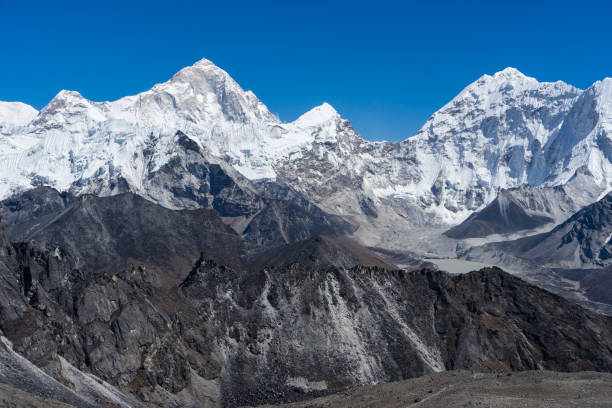
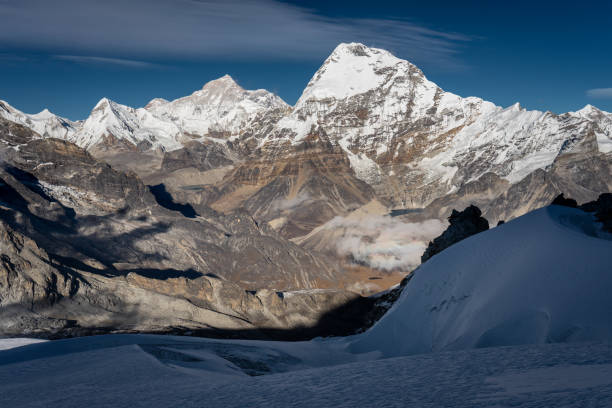
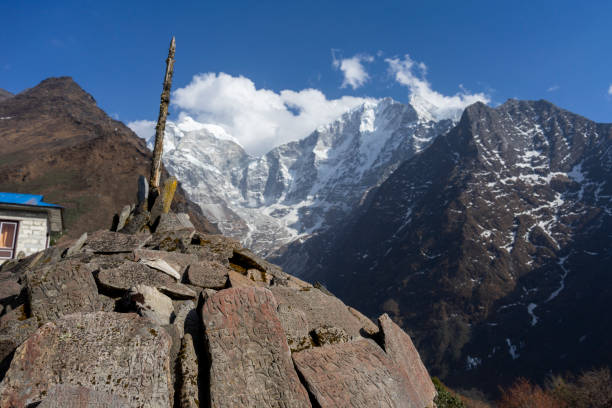
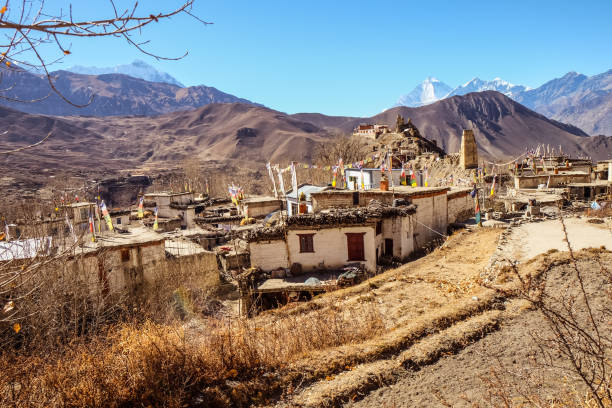
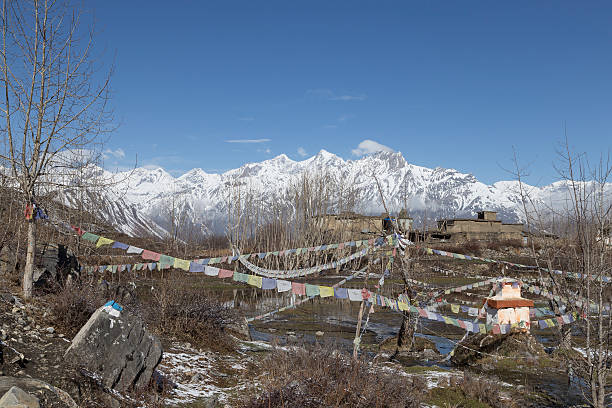


The Makalu area in eastern Nepal is protected by the Makalu Barun National Park and Conservation Project. Established in 1992 the Makalu Barun National Park covers 2330 sq. km. Nestled in eastern Nepal this national park contains its namesake, Makalu Mountain. It is the highlight in this stunning wilderness. A gemstone in the wilderness…a dominating peak, the 5th highest in the world…& the rare birds give you good company all the way…. And you will find 16 other distinct peaks in this national park. Formerly a restricted area, it spans five major ecological zones where can be found the lush, tropical Arun Valley, dense forests or rhododendron and fir and alpine meadows that lead to the might Barun glacier. From the base camp, any one can view the spectacular Mt. Makalu. This mainly low altitude trek is centered on the Arun Valley, in eastern Nepal. If you are one of those seasoned trekkers/climbers looking for the big mountain challenges, then crossing the gritty high passes of the Sherpani Col, the West Col & the Amphu Lapcha straight into Everest country, you must be geared for some highly technical mountaineering starting in the Makalu region…and the rewards will give you a heavenly bliss of something well accomplished. The sub-tropical valley floor of the mighty Arun River is in places densely forested, contrasting with the terraced slopes higher up, which are farmed by villagers of diverse tribal groups. High pastures typify the upper slopes, which border on the Makalu-Barun National Park, an important conservation area for many threatened species. The trails rise from 850 meters (2,788ft) to 5000 meters (16,900ft) above sea level.
Makalu region is different in many ways even it is very close to the Everest region. Some 32,000 people of ethnically diverse background live in this region. Sherpa people, originally from Tibet, live at higher elevations and follows Buddhist traditions. Rais, follow and practice an ancient religion, which reinforces them to live in harmony with nature. In lower elevations live a handful of other hill tribes including Tamang, Magar, Gurung, Newar, Brahmins, and Chhetris.This region is culturally rich but economically poor and isolated. People are heavily depend upon forest resources for animal fodder, fuel, food, housing materials, fertilizers, medicine and other creative uses.
Arun Valley is really a non touristic area but we can see significant views of Mt. Everest, Makalu, and hundreds of other mountains just on your eye. The trek requires stamina and fitness to fully appreciate the beauty of the region, which provides some outstanding mountain views. The trek requires stamina and fitness to fully appreciate the beauty of the region, which provides some outstanding mountain views. Sherpa, Rai and Limbus are the main inhabitants of this region. The Arun Valley, east of Everest, leading to Makalu Base Camp is least visited by tourists like Nepal’s far west. Trek to Makalu can be cut short by taking direct flight to Tumlingtar, a small village located on a plateau. The trek from Tumlingtar at barely 390m to Makalu Base Camp at 4,800m is a long and arduous as vast range in temperatures is confronted, from steamy in the lowlands to snow storms at high altitude. Walking north up the Arun river to Sedua and Num, then crossing Barun La (4110m.) into the upper Barun khola valley for a close look at Makalu. You can put together an even wilder trek by crossing Sherpani Col and west Col into the upper Hongu valley. The highest point of this trek is Salpa Bhanjyang and also we can visit Hindu holy call Lake Salpa holy Lake (3414 m.). This is a marvelous and easy trek for trekkers who do not want to encounter a mass influx of tourists on the trail but equally enjoy beautiful scenarios of valleys, splendid views of silvery mountains. The tempting views of Arun River and valleys can be seen on the way of trekking terrain. This region is blessed with an incredible diversity of natural beauty and culture. Due to its isolation and lack of tea houses this area still receives few trekkers. Sherpa, Rai and Limbus are main habitants in this area. Walking north up the Arun river to Sedua and Num, then crossing Barun La (4110m) into the upper Barun Khola valley for a close look at Makalu (8463m). You can put together even wilder trek by crossing Sherpani Col and west Col into the upper Hongu valley. The second part of the trek is very difficult and almost impossible without previous experience.
The isolated Remote valleys of the Makalu Barun region don’t see many visitors, but for those who do care to venture into its environs, will encounter a lifetime experience never to be forgotten; this region is also known for its thunder showers, snow and the mesmerizing glaciers that leave us gasping for breath. Hiking in this region is best done in the autumn months of October and November. But don’t hesitate & contemplate for too long – there’s a major hydropower project in the wings, & if you truly love nature of an extremely unique kind, then you better make a beeline to trek Makalu right now.

