


The Nar Phu Thorong La Trek, also referred to as the Nar Phu Annapurna Circuit Trek, presents a unique opportunity to explore the remote and untouched Himalayan territories of the Nar Phu Valley before embarking on the Annapurna Circuit Trek. The Nar Phu Valley is steeped in history and culture, offering a glimpse into the lifestyles of the 17th and 18th centuries. This trek combines the renowned Annapurna Circuit Trail from Manang, leading to the world’s highest pass, Thorong La at 5416m. Located in the Annapurna trekking region, the Nar Phu Thorong La Trek allows you to discover the hidden treasures of the Nar and Phu Tibetan Villages in Nepal. Immerse yourself in the ancient culture and embrace the pristine natural beauty of Nar and Phu Villages before crossing the Kang La pass at 5306m and rejoining the Annapurna Circuit trek in Manang. The journey continues until Jomsom, passing through the world’s deepest Gorge, where you will have the opportunity to take a scenic flight to Pokhara. From Pokhara, the trek on foot will be concluded, followed by a drive to Kathmandu, concluding our Nar Phu Thorong La trek. This trek offers a chance to witness the awe-inspiring beauty of flora and fauna, diverse climates, cultural diversity, breathtaking mountain views, and much more. The Trekking Hub Company provides an exceptional package for the Nar Phu Thorong La Trek, led by experienced Sherpas and guides, at a reasonable cost.
If you are considering deviating from the popular Annapurna Circuit trek to discover the hidden territory of Nepal, the Nar Phu Valley Trek is an ideal choice. This trek offers a breathtaking experience with a touch of the Himalayan wilderness, taking travelers and trekkers through the pristine and lesser-known Nar Phu Valley. Situated between the well-traveled Annapurna and Manaslu regions, this valley receives a relatively small number of visitors each year, as it was only opened to tourism in 2002. The Nar Phu region is renowned as a true gem, providing trekkers with the opportunity to explore untouched valleys that showcase a unique blend of untouched Himalayan landscapes and traditional Buddhist culture. However, it is important to note that a special permit is required to trek in the Nar Phu Valley, as it is designated as a restricted area by the Nepalese government. Despite the necessary permits, this remarkable trek rewards adventurers with stunning views of medieval settlements, narrow gorges, and a variety of wildlife, including the elusive blue sheep.
After enjoying a delightful sightseeing tour in Kathmandu, we embark on our 19-day Nar Phu Valley trek. Our journey begins in Jagat, where we drive after leaving Kathmandu. From there, we follow the renowned Annapurna Circuit trail to Koto via Dharapani. At Koto, the trail diverges, and we take the less-traveled path that leads us to the Nar Phu Valley region.
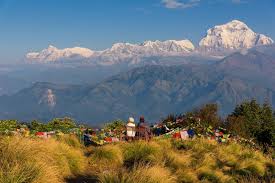
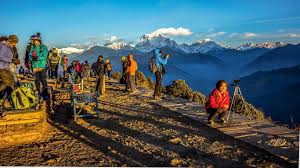
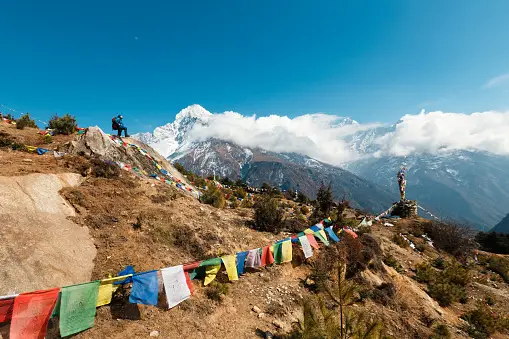
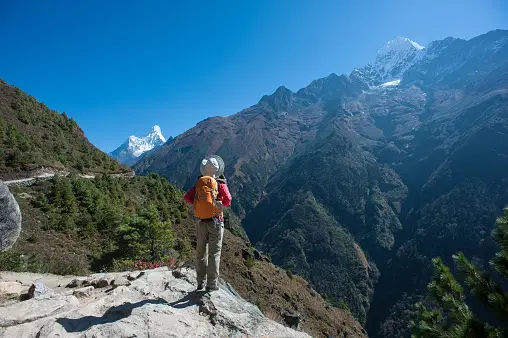
This pristine region is home to alpine and sub-alpine scrubland, creating a sanctuary for wildlife such as snow leopards and blue sheep. As we trek through this breathtaking landscape, we are treated to stunning views of snow-capped mountaintops as our backdrop. Along the way, we pass by remote settlements, awe-inspiring rock formations, glistening glaciers, and narrow canyons. We also encounter beautiful woodlands, vibrant prayer stones, monasteries, and gompas, adding cultural richness to our trek. Throughout our journey, we are warmly welcomed by the locals, who graciously share their hospitality and introduce us to their ethnic culture. This trek promises an exhilarating adventure filled with natural beauty and cultural immersion.
Nar and Phu are distinct villages that are home to over one hundred houses occupied by indigenous Tibetans. These villagers rely on yak rearing and the salt trade as their main source of income. By visiting these villages, one can gain a deeper understanding of the customs and way of life of the local ‘Bhote’ communities. However, the trek to these villages offers more than just a glimpse into their lifestyle. Along the way, you will also come across Jhunam, Chyarkha, Meta, and Khayang. Recently, the Annapurna Conservation Project (ACAP) expanded its reach to include Nar and Phu Valley, aiming to promote sustainable tourism in this hidden region. Additionally, the trek offers breathtaking views of Annapurna II, the Himlung Himal, Gangapurna, and Tilicho Peak.
After we explore the Nar Phu Valley, we will now make our way across Kang La Pass (5,322m) from Nar to Nawal. Following that, we will return to the Annapurna Circuit and reach Manang. During this leg of the journey, we will encounter dry and desert-like terrain as we trek toward the sacred Muktinath, passing through Yak Kharka and Thorong Phedi. As we continue our trek, we will come across lush green paddy fields, oak forests, arid landscapes, breathtaking mountain views, and the world’s deepest gorge. Our journey will conclude in Jomsom, the district headquarters of Mustang. From there, we will take a flight back to Pokhara and then proceed to Kathmandu.
Experience a lifetime of memories by embarking on the Nar Phu Valley Trek. Secure your spot now by reaching out to us and making your reservation today!
The Nar Phu Thorong La Trekking offers the best experience and a successful trip when done during specific seasons. The ideal times for this trek are Autumn (September to November) and Spring (March to May). These seasons provide pleasant temperatures, stable weather conditions, minimal precipitation, and clear skies. The temperature during these seasons typically ranges from -5 to 25 degrees. On the other hand, the Winter season (December to February) brings extremely cold weather in the high altitudes, heavy snowfall, storms, and poor weather conditions. The temperature during this season ranges from -10 to 15 degrees. The rainy season is also not recommended due to heavy rainfall, floods, landslides, and poor visibility. The temperature during the rainy season ranges from 5 to 33 degrees. Although it is possible to trek in Nar Phu Thorong La Trek during December, February, and August, it is advisable to avoid the rainy and winter seasons for a more enjoyable experience.
Before embarking on the Nar Phu Thorong La Pass trek, it is crucial to acquire three different types of permits. These permits must be obtained before commencing the journey from Kathmandu. The Nar Phu Valley is situated within a restricted and protected area within the Annapurna Conservation Area. Therefore, special permits, Annapurna Conservation Area permits, and a TIMS Card are mandatory. Fortunately, all entrance fees are already included in the package. To obtain the special permit, you will need to provide your passport with a valid visa, passport-size photos, and the original passport until the permit is issued. The special permits can be obtained from the Immigration office, the ACAP from the Tourism Board, and the TIMS Card from TAAN. Below, you will find detailed information regarding the permit fees for the Tsum Valley Thorong La Pass trek.
Trekkers Information Managment System (TIMS) Card Cost is USD20 Per person
Annapurna Conservation Area Permit (ACAP) Cost is USD 30 per person
Restricted Area Permit (RAP) Cost is USD 100 for 7 days P/P, from September to November, and an Additional day charge of USD15 per day per person after a week
Restricted Area Permit (RAP) Cost is USD 70 for 7 days P/P, from December to August, and an Additional day charge of USD 15 per day per person after a week
The packaging list for the Nar Phu Thorong La Pass trek holds immense importance. It is crucial to have appropriate gear that is suitable for the diverse climates encountered throughout the journey, ranging from subtropical to tundra climates. After crossing the Thorong La Pass, you will enter the arid land of the trans-Himalayas, where dry winds prevail. During this expedition, you will face hot temperatures while walking, cold weather at high elevations, and dry winds, along with dust in the Kaligandaki Valley between Muktinath and Jomsom. Therefore, we recommend the following trekking essentials (Packing List) for your Nar Phu Valley Thorong La Pass Trek.
Sleeping bag and down jacket suitable for temperatures around -15 degrees Celsius.
Waterproof hiking boots for sturdy and reliable footwear.
Light sandals or plimsolls for wearing in the lodge
Towels, shampoo, and toiletries for personal hygiene.
Trekking pole and headlamp for assistance during the trek.
Camel bag or water bottle to stay hydrated throughout the journey.
Iodine water purification tablets or sterilizer pens to ensure safe drinking water.
Several large plastic bags, one for storing smelly clothes and another for keeping items dry.
Windbreaker jacket and fleece coat to protect against cold and windy conditions
Warm woolen beanie, sun hat, and multiple pairs of socks for adequate head and foot protection.
Long and short trekking pants in various quantities for flexibility in different weather conditions.
Thin thermal under trousers for added warmth.
Several quick-dry t-shirts, gloves, sunglasses, and sun cream for sun protection.
Duffel bag for your equipment, which will be carried by a porter.
A day bag with a capacity of 30 liters to carry your valuable belongings.
The Nar Phu Valley Thorong La Pass trek is often considered a moderately difficult trek, but in reality, it presents a challenging adventure that spans 14 days of walking and includes two high passes: Kang La (5306m) and Thorong La (5416m). Completing the Nar Phu Throng La Pass Trek requires a high level of fitness and good health. It is also crucial to have the appropriate trekking gear. As you journey through various climates during this remarkable experience, it is essential to prepare a detailed packing list that meets the unique requirements of the Nar Phu Valley Thorong La Trek. After passing Kang La Pass (5306m), you will follow the famous Annapurna Circuit Trek, encountering pine and tundra climates until you reach Thorong La. From there, you will descend along an arid, trans-Himalayan, and windy trail towards the Muktinath Jomsom Trail, before returning to Pokhara and Kathmandu. Despite its difficulties, this trek offers breathtaking beauty, including lush green valleys, charming traditional villages of Nar and Phu, diverse woodlands, captivating flora and fauna, majestic mountain views, and the exhilaration of conquering two high passes. Additionally, it provides a deep cultural immersion as you experience different climates and engage with local traditions. For nature and culture enthusiasts, this highly recommended trek is a definite must.
How can one get ready to combat Acute Mountain Sickness?
Ensure adequate hydration by consuming approximately 3 to 4 liters of water daily.
Take leisurely walks and remember to take regular breaks every 30 minutes during your trek
It is important to adhere to the instructions provided by your guide and follow the planned itinerary.
Avoid rushing and unnecessary worry during your trip.
Consume sufficient food to replenish your stamina levels.
Take pleasure in the beauty of nature and the surrounding scenery.
Refraining from consuming alcohol and smoking at altitudes above 4000m is crucial for maintaining good health and preventing altitude sickness.
The Nar Phu Trek, combined with the Thorong La, offers a unique and unforgettable experience. This itinerary is considered one of the best as it covers the entire Annapurna region, including the renowned Annapurna circuit trek. Additionally, it allows you to explore the hidden valley of Nar Phu and its ancient Tibetan villages, passing through the Kangla at an impressive altitude of 6306m. The cost of the Nar Phu Thorong La Pass trek varies depending on the group size, ranging from USD 1000 to USD 1500 per person. Please note that Nar Phu Valley is a restricted area, and solo trekkers are not permitted. However, we can arrange for you to share permits with other clients, ensuring you can still embark on this incredible journey. The cost of the Nar Phu Thorong trek package includes a knowledgeable guide, a porter or sherpa, permits, transportation, flights, accommodation, and meals. It is important to mention that if you are traveling in a group, you will benefit from a discounted rate compared to a private tour. For your convenience, here is a breakdown of the cost for the Nar Phu Thorong Trekking:
The Cost of the Nar Phu Valley Thorong La Trek is USD1500, if you are solo
The Cost of the Nar Phu Valley Thorong La Trek is USD 1300 P/P if you are in a Group of 2-6 Pax
The Cost of the Nar Phu Valley Thorong La Trek is USD 1100 P/P if you are in a Group of 7-10 Pax
You are warming welcomed in this amazing capital city, Kathmandu. As you land at Tribhuvan International Airport (TIA), one of the representatives from our office will greet you and transfer you to the respective hotel. Then you will be informed about the further planned activities. Overnight in Kathmandu.
Max. Altitude: 1350m/4429.134ft
Meal: Dinner
Accommodation: Hotel
This day is scheduled for sightseeing of historical, cultural, and religious sites in the valley. After feeding our breakfast, we head towards Swyambhunath (Monkey Temple), Kathmandu Durbar Square, Pasupathinath and Boudhanath, where you can enjoy seeing art, culture, paintings, etc. After finishing the day tour, you will be introduced to your trekking guide and informed about the programmed trek. In the evening, you will prepare yourself for the trek with the needed trekking equipment. Overnight in Kathmandu.
Max. Altitude: 1350m/4429.134ft
Meal: Breakfast
Accommodation: Hotel
After taking our breakfast, we begin our journey early in the morning, at around 7 am. Viewing the charming countryside, abundant biennials, villages, and rivers of Nepal, we reach Beshishahar. From Beshishahar, we drive to Jagat by local Jeep. We will be driven on a smooth road up to Besishahar. However, from Beshishahar, we should pass through dusty, coarse, and bumpy roads, but the scenic view from our windowpane will be more exciting throughout the journey. Overnight in Jagat.
Max. Altitude: 1100m/3608ft
Meal: Breakfast, Lunch and Dinner
Accommodation: Tea house/Lodge
We head towards Dharapani after inhaling breakfast in Jagat. The trial descends up to the river, heads through the bank of the river, and continues through the abundant forest to Chyamje. Today we enter Manang district, and the trial goes on through rice, potato, barley fields, and tiny Tibetan villages. Rambling along the waterfalls and scarps, we finally reach Dharapani, one of the big villages in Manang district. Overnight in Dharapani.
Max. Altitude: 1,960m/6,430ft
Meal: Breakfast, Lunch and Dinner
Accommodation: Tea house/Lodge
We head towards Bagarchhap after our breakfast, spending almost an hour through pine and fir forests. Continuing our trek, we head towards Danaque. We start our trek upwards for Timang now. Subsequently, we pass through pine forests again till Latamarang, our lunch place. After lunch, we continue our journey through the forest, getting a short glimpse of Annapurna II. Finally, we reach Koto village. Overnight in Koto.
Max. Altitude: 2,610m/8,563ft
Meal: Breakfast, Lunch and Dinner
Accommodation: Tea House/Lodge
After registering our restricted area permit at the Police Check Post, we walk along the bank of Soti Khola. After crossing some awe-inspiring pine forests, suspension bridges, and becks, we reach Dharmasala. We take our packed lunch on the way because we will not see any lodges or teahouses on the way. Continuing our journey, through forests and ascending steeply, we reach Meta village, from where we shall have good views of Annapurna II and Lamjung Himal. Overnight in Meta.
Max. Altitude: 3,560m/11,680ft
Meal: Breakfast, Lunch and Dinner
Accommodation: Tea House
Today, we begin our journey, passing through some ups and downs and some suspension bridges as well. After walking at around 4 hours, we reach Kyang. We again keep trekking through Phu Khola enjoying marvelous appearance of Amotsang Himal, Kangaroo Mountain and Pokharkan. Finally, we reach in Phu Gaon. Overnight in Phu Gaon.
Max. Altitude: 4,250m/13,944ft
Meal: Breakfast, Lunch and Dinner
Accommodation: Tea House
After some days of continues hike, this day is the scheduled as an acclimatization day. Trekkers are suggested to be adjusted with altitude and take rest. As we are in Lost/Hidden Valley, we can wonder around the town exploring culture, religion, talking to the local people of the different ethnic groups such as Ghale, Gurung, and Lama. Moreover, we can look around the ancient monastery which was erected by the first Tibetan migrants. Overnight at Phu Gaon.
Max. Altitude: 4,250m/13,944ft
Meal: Breakfast, Lunch and Dinner
Accommodation: Tea House
We hike downwards crossing many suspension bridges and streams. It takes almost 4 hours to reach Mahendra Pul, a bridge, which was visited and financed by the then King Mahendra. Here we take our lunch. After lunch, we head upwards straightly crossing many Buddhist stupas until Nar Village. It approximately takes 2 hours to reach Nar village after lunch. Overnight in Nar.
Max. Altitude: 4,110m/13,484ft
Meal: Breakfast, Lunch and Dinner
Accommodation: Tea House
This day is also scheduled as acclimatization day. We shall hike nearby at around 2 hours and explore Nar village. We will closely observe the vivid panorama of Kangaroo, Pokharkan, Amodsang Himal and Pisang Peak. Moreover, today we should be well prepared for Kang La Pass. Overnight in Nar.
Max. Altitude: 4,110m/13,484ft
Meal: Breakfast, Lunch and Dinner
Accommodation: Tea House
It is a long day trek with some challenges ahead. We need to get up early and move towards Kangla Pass following a steep rocky track. As we reach to the pass, we see the clear Annapurna cordillera. We can enjoy views of 360-degree snow covered, splendid mountains. We then trek down following a very steep track to Ngwal where we shall spend overnight today. Overnight in Ngwal.
Max. Altitude: 5,322m/17,460ft
Meal: Breakfast, Lunch and Dinner
Accommodation: Tea House
We head towards Manang Valley after taking breakfast enjoying the excellent view of easy day to Manang with the superb view of Annapurna II, Annapurna III, Pisang Peak, Gangapurna, and Gandharva chuli. We move through a smooth valley passing the pine forest, keeping the Marsyangdi river aside. On the way we can visit Braga monasteries as well. Gradually, we hike uphill to Mungli. Following the main trial of Annapurna Circuit, we reach Manang, one of the main villages of Manang District having many teahouses and a beautiful monastery. It is the place from where we can observe Annapurna Range closely. Overnight in Manang.
Max. Altitude: 3,540m/11,614ft)
Meal: Breakfast, Lunch and Dinner
Accommodation: Tea House
We set out our journey towards the village named Tanki, crossing a stream. From Tanki, we head northeast towards Marshyandi Valley leaving Jharsang Khola. The trek continues upwards passing some pastures to reach Gunsang village. Now the trek continues through grassy fields where horses and yaks blissfully pasture. As we cross a small wooden bridge, we ascend to an aged Mani wall and then to our final destination for today, Yak Kharka. As the hike is short today, we walk to high altitude and may get tired early. Unhurried and gradual walk helps us to avoid altitude sickness. Overnight at Yak Kharka
Max. Altitude: 4,110m/13,484ft
Meal: Breakfast, Lunch and Dinner
Accommodation: Tea House
Leaving behind Yak Kharka, we head towards Thorang Phedi today. It is aforethought as the base of Throng La pass. We continue our journey ascending till we reach the source of Marsyangdi river. Leaving this we ascend into alpine region, a completely different world. After hiking for 3-4 hours we reach our destination of today. Before crossing the highest pass of our trek, we should be well prepared. You have an option to spend overnight at Thorong high camp which is short ascend from Throng Phedi but the risk of altitude sickness may increase as you are in 4800 m there. So, we suggest you to stay at Throng Phedi. Overnight at Thorong Phedi.
Max. Altitude: 4,600m/15,092ft
Meal: Breakfast, Lunch and Dinner
Accommodation: Tea House
It is the most important, challenging and rewarding day. We are going to cross the highest pass of the entire trek. Throng La, a paradise site, is situated at 5416m from the sea level. We begin our journey as early as possible (3-5am) because we have to reach the high pass before 10 to be protected ourselves from strong winds and cloud. This day we are ascending nearly 1000m and descending around 1600m to reach Muktinath, which will be the lifetime memory. Thorong La, the mountain pass is situated between the crags of Yakwakang and Thorung Peak. It is the place from where we can see panoramic views of Annapurna Himalayas, surrounding us from all directions including other peaks like Yakgawa Kang, Khatung Gang and will be greeted by Mt. Dhaulagiri from the long distance.
After capturing the vivid panorama of the summit, we head downwards for Muktinath, a well-known religious locus for Hindu and Buddhist followers. We shall have an ample opportunity to visit temples such as Jwala Mai temple, monasteries and main Muktinath Temple, which is surrounded by 108 water spouts. The way for Muktinath is less jerky. After some hours of trek, we enter the meadows having grasslands to Muktinath. Overnight at Muktinath
Max. Altitude: 5,416m/17764ft
Meal: Breakfast, Lunch and Dinner
Accommodation: Tea House
This day begins trekking descend passing through Jharkot, Khingar and Kagbeni villages. We reach to Ekle Bhatti to take our lunch. Further walking alongside the Kaligandaki River, we reach Jomsom for our overnight stay. Jomsom is one of the major towns of Mustang district having many facilities including airport. Overnight in Jomsom
Max. Altitude: 2,715m/8,910ft
Meal: Breakfast, Lunch and Dinner
Accommodation: Tea House
After taking our breakfast we move to Jomsom airport for our scheduled flight for Pokhara. It takes at around 30m to reach to Pokhara from Jomsom. We shall be flying passing the deepest Kali Gandaki Gorge, viewing many mountains from aircraft. As you reach Pokhara earlier, can do some sightseeing there.
Max. Altitude: 827m/2,700ft
Meal: Breakfast, and Lunch
Accommodation: Hotel
We shall head towards Kathmandu on a private vehicle/tourist bus today. On the way you will enjoy the views of natural scenery, farmlands, rivers and way of the living of the people here. It may take 6-7 to reach the capital city, Kathmandu depending upon the traffic condition. As you reach Kathmandu, you will be transferred to your respective hotel. You can enjoy rest of your day relaxing, enjoying or wandering around the city. Overnight at Kathmandu.
Max. Altitude: 1,300m/4,428ft)
Meal: Breakfast
Accommodation: Hotel
This is time that we depart from you after 19 wonderful days of your Nepal trip with Nar Phu Valley Trek. Today, you are flying back leaving this amazing country. You will be transferred to Tribhuvan International Airport (TIA), before 3 hours of your scheduled flight. Have a flight back home!!! See You again!
Max. Altitude: 1,300m/4,428ft
Meal: Breakfast

