


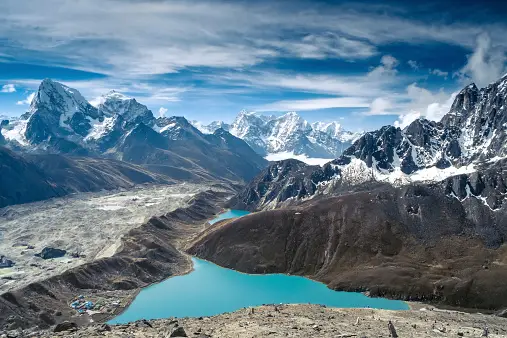
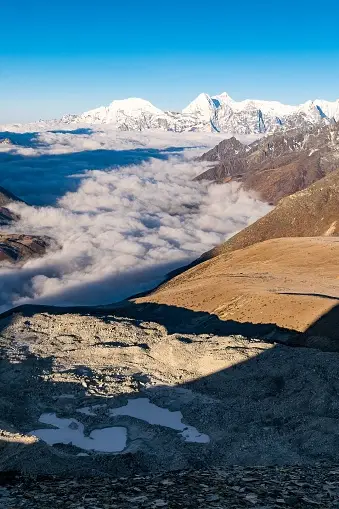
The Upper Mustang Trek is an exceptional trekking route within the Annapurna trekking region. It provides incredible experiences of the Lo kingdom, showcasing the influence of Tibetan culture, lifestyle, monasteries, and breathtaking views nestled between the Annapurna ranges and the Tibetan plateau. Venturing into the lesser-explored region of Nepal, the Upper Mustang Trek offers a unique opportunity to immerse oneself in the mystical world of the ancient Buddhist kingdom of Mustang. Established by the warrior Ame Pal in 1380, the walled city of Lo Manthang and the entire Upper Mustang region have remained isolated from the outside world since the 14th century. Although limited access was granted to Nepalese citizens, it was only in 1992 that outsiders were allowed to enter. As a result, this territory has had the chance to gradually develop and preserve its distinct culture and traditions, which bear resemblance to those of Tibet. The Mustang Trek begins in Kathmandu and proceeds to Pokhara, followed by a short and picturesque flight to Jomsom. From there, the trek continues to Lomanthang, the capital of the Lo-Kingdom, allowing for exploration of the entire region. Finally, the journey concludes in Kathmandu, marking the end of the Upper Mustang Trek.
Upper Mustang trek is Surrounded by the snow-capped peaks of Annapurna, Dhaulagiri, and Nilgiri to the north, Upper Mustang is a paradise on earth. Designated as one of Nepal’s restricted regions, this area remains unaffected by modern development and lacks contemporary facilities even today. Apart from a few types of plants that can survive in a dry climate, there is no visible presence of other vegetation in this region. Despite its arid nature, the landscape bears a striking resemblance to the Tibetan plateaus.
During the 17-day-long Upper Mustang Trek, adventurers will have the opportunity to immerse themselves in the captivating beauty of desert-like terrain and towering cliff-faced landscapes. Additionally, they will have the chance to experience the traditional lifestyle and customs of the local people while being captivated by the magnificent architecture and artifacts displayed in various gompas, monasteries, and a four-story royal palace. And if that wasn’t enough, prepare yourselves to explore ancient cave dwellings nestled high in the rocks. Undoubtedly, the trek to Upper Mustang will leave trekkers with cherished memories, even of things they hadn’t anticipated during this exhilarating journey, which will certainly reveal themselves at some point in the future.
The Upper Mustang Trek, known for its prosperity, commences with a 6- or 7-hour drive or a 30-minute scenic flight from Kathmandu to Pokhara (an additional $120 per person). Enjoy the remarkable evening at Lakeside and spend a worthwhile night in Pokhara. The following morning, embark on a scenic flight from Pokhara to Jomsom, located on the northern side of the Himalayan Ranges of Annapurna and Dhaulagiri. Upon landing in Jomsom, the journey to Kagbeni and Muktinath begins, encountering a dusty road and a strong Himalayan storm. Follow the trail along the linked road to Tibet, passing through ancient villages such as Chele, Ghaykar, Samar, Syanbochen, Ghami, Tsarang, Lo Manthang, and Chooser, and finally return to Kathmandu via Pokhara. The best season for the Upper Mustang Trek is from February to December. Additionally, the trek can be considered during the rainy season due to the rainshadow region of Nepal.
Upper Mustang is an exceptional monsoon trek, making it perfect for trekking activities all year round. Situated in the rain shadow of the Himalayas, it offers a unique experience. Don’t hesitate to reach out to us and plan this remarkable adventure for the upcoming tourist season!
What types of permits are required for the Upper Mustang Trek?
The ancient Lo-Kingdom of Upper Mustang is a remarkable destination that boasts the most well-preserved natural and cultural heritage. Situated beyond the majestic Annapurna and Dhaulagiri Ranges, this hidden and secluded territory offers an unparalleled travel experience. Explorers who are captivated by the world’s most preserved wonders, such as epic cliffs, monasteries, ancient palaces, vibrant red rock formations, and the rich Bon culture, will find Upper Mustang to be an ideal choice. Embarking on the Upper Mustang trek commences from Kagbeni, and to enter this extraordinary ancient kingdom, a special permit is mandatory. The permit costs USD 500 per person for 10 days. Additionally, an Annapurna Conservation Area permit is required, which amounts to USD 25 per person. This permit can be obtained from either Beni or Jomsom, the starting points of the trek. It is important to note that a group of at least two travelers is required to obtain the special permits, and the necessary documentation includes a valid passport, a copy of the passport, and a passport-sized photograph.
A restricted area permit (RAP) must be issued for a minimum of 10 days, costing USD 500. Each additional day beyond 10 days incurs a charge of USD 50 per day.
Annapurna Conservation Area Permits (ACAP) have no duration limitation and are specifically for the Annapurna Conservation Area. The cost is USD 25 per person.
Trekkers Information Management System (TIMS) permits have no regional limitations and cost USD 17 per person.
Tiji Festival in the Upper Mustang
Discover the enchanting Tiji Festival, a significant celebration in the Mustang region that commences with exquisite adornments around the palace and courtyard. Immerse yourself in a multitude of activities that showcase the rich rituals and cultural traditions of this festival. Embark on a mesmerizing journey to the ancient kingdom of Lo-Manthang in Upper Mustang, where the Tiji Festival takes place annually. Deeply rooted in Tibetan customs, this revered event symbolizes the victory of Dorjee Sonnu, the embodiment of Lord Buddha, over the formidable demon Man Tam Ru, notorious for causing chaos in the land.
Known as “Tiji,” derived from the phrase “Tempa Chirim,” which translates to “Prayer for World Peace,” this extraordinary festival unfolds in May, captivating onlookers with its vibrant ceremonial dances performed by the monks from the Choedhe Monastery. Experience the intricate portrayal of ancient legends, from the expulsion of Ma Tam Ru Ta to the birth of Dorjee Sonnu, all brought to life during the three-day spectacle of the festival. Nestled amidst the rugged terrain of the Upper Mustang, Lo-Manthang offers a gateway to a hidden world immersed in Tibetan culture and historical significance. The region’s isolation has beautifully preserved its unique identity, with picturesque whitewashed settlements, flourishing barley fields, and the colorful presence of prayer flags that adorn the breathtaking landscape.
To fully immerse yourself in the enchanting Upper Mustang region, it is crucial to select the optimal time for your visit. If you wish to witness the vibrant festivities, make sure to plan your trip during the Tiji festival in May. The upper Mustang is situated in a rain shadow, allowing for trekking even during the rainy season. Similar to other trekking regions, the ideal seasons for exploration are autumn (September to November) and spring (March to May). However, it is important to note that the winter season (December to February) is not recommended for trekking in the Upper Mustang due to extreme cold and trail blockages caused by heavy snowfall.
Effective preparation is crucial to guaranteeing a triumphant journey. To ensure an extraordinary hiking adventure, we have assembled a thorough checklist of items that you must arrange before commencing the renowned Upper Mustang Trek. We aim to provide you with an insight into the essential things you should prepare for your trekking experience in Nepal.
Essential Gear: Prepare a backpack or daypack (30L), depending on whether you will be using a porter. Remember to bring a 2-3-liter water bottle, trekking poles, a water purification method, and a sleeping bag with a liner (consider a -20-degree capacity for winter treks).
Headwear: To protect yourself from the sun and wind, you can choose between a sun hat or a scarf and mask. In colder climates, it is recommended to wear a winter hat or a wind-brimmed hat that is designed to shield you from the winter elements. Additionally, it’s always wise to carry a headlight with spare batteries to ensure you have adequate lighting in any situation.
Face Protectors: When it comes to safeguarding your skin, don’t forget to include sunscreen, sunglasses with UV protection, and face and body wipes in your daily routine. These items play a vital role in shielding your skin from harmful UV rays and keeping it clean and refreshed.
Handwear: Lightweight gloves offer comfort and flexibility, whereas heavyweight winter gloves provide superior insulation for extreme cold conditions.
Body Requirements: For a successful hiking experience, it is important to have the appropriate clothing. This includes hiking shirts made of synthetic fiber, long-sleeved shirts, a hooded rain jacket, a fleece jacket, lightweight cotton pants, polypropylene underwear, a down jacket for winter treks, and waterproof jackets and pants.
Footwear: The footwear options include waterproof hiking boots, thick wool socks, and sports shoes or sandals for relaxation during trek-off time.
Toiletries: When going hiking, make sure to pack a fast-drying towel, toothbrush, toothpaste, toilet paper, soap, shower gel, washing powder, nail clippers, and a compact mirror.
Upper Mustang Trekking Cost for 2024/2025
The Upper Mustang trekking cost ranges from USD 1700 to USD 1900 per person for the complete package provided by Trekking Hub Company. The actual cost is determined by the level of service and the size of the group. The Upper Mustang trekking route is a hidden treasure in the Annapurna Region that remains relatively unexplored. It is often regarded as the eighth wonder of the world and visiting Upper Mustang is a unique and unforgettable experience. This remarkable destination has gained recognition in various popular publications, and newspapers, and among passionate travelers. However, accessing this region requires obtaining restricted permits, which can be quite costly. The permits cost USD 500 for 10 days, with an additional USD 50 for each extra day. Nevertheless, there is no need to be concerned about the cost, as Himalaya Trekking Path offers comprehensive packages at a reasonable price. These packages include all the necessary permits and services mentioned in the Upper Mustang Trekking itinerary, ensuring a convenient and stress-free experience. The cost of the trek is dependent on the size of the group and the level of service, but rest assured, our company provides exceptional service at competitive prices.
Namaste! Welcome to Nepal, a Himalayan nation widely celebrated for its hospitable natives, medieval architectural marvels and diverse wildlife. Outside the terminal of Kathmandu Airport, you’ll find one of our representatives waiting for your arrival. Succeeding the exchange of cordial greetings, you’ll be escorted to your hotel. Acquire some rest and loosen up your tired muscles enjoying the amenities offered by the hotel then go for an evening stroll around Thamel to find your delight in the pleasant ambiance surrounding it.
Max. Altitude: 1350m/4429.134ft
Meal: Dinner
Accommodation: Hotel
Today, you can have an excursion to the prominent landmarks of Kathmandu. A modern city which still retains its traditional values, Kathmandu is an excellent place for sightseers with the special interest in vintage artistic works. If you are confused about where to begin when we are present in your aid! Start your jaunt from the holy Hindu temple of Pashupatinath and discover the sensation of calmness within you in the spiritual atmosphere. Make a stopover at the sacred Buddhist stupas of Swayambhunath and Boudhanath. Surround yourself with the true essence of Tibetan Buddhism as well as witness the sheer magnitude of time-honored stupa structures. Still not satisfied? Then, explore the Basantapur Durbar Complex positioned at the heart of the city to embrace ancient craftsmanship.
Max. Altitude: 1350m/4429.134ft
Meal: Breakfast
Accommodation: Hotel
Early in the morning, get onboard an airplane cruising in the air to Pokhara (for additional fees of USD 105 per person one way) or take a drive via a tourist bus (complimentary); it rests on your personal preferences. Despite the means of transportation you choose, you’ll definitely observe blissful landscapes featuring verdant valleys, lush greenery, sparking mountaintops, raging rivers, rustic villages, hills, and terraced fields. Only the time utilized to conclude the trip varies. A flight will take about 35 minutes, and ground travel will consume nearly 6-7 hours. Some travellers say the aerial vistas are better than what we see from the ground, but the fact is that it all depends on individuals’ tastes and perspectives.
Max. Altitude: 823m/2700.13 ft.
Meal: Breakfast
Accommodation: Hotel
This morning, we‘ll have a flight to catch bound for the picturesque town of Jomsom. The aerial outlooks of Dhaulagiri and Annapurna in close proximity are simply incredible. Once landed, we’ll start our trekking venture and head uphill on the rugged trail across mountainous terrain along the Kali Gandaki River to Kagbeni (2,810m). Positioned at the confluence of two rivers, majestic vistas of Mt. Nilgiri can be observed to the south of this quaint settlement, famously known as the ‘gateway to Upper Mustang’. If everything goes as scheduled, we’ll probably set off on a side trip to Muktinath, which will add an additional six hours to our planned itinerary. The path to this holy Hindu temple is fairly easy and features many minor ups and downs. Pilgrims of both Hindu and Buddhist religions pay their homage to Lord Muktinath throughout the year. You’ll unearth peace of mind in this divine place.
Max. Altitude: 3720m/12204.72ft.
Meal: Breakfast, Lunch and Dinner
Accommodation: Tea house/Lodge
After inspection of necessary permits at the official checkpoint located near the Kagbeni’s border, we’ll continue our advance alongside Kali Gandaki River only to climb over multiple ridges past many monasteries, caves, and apple orchard to Tangbe. Encircled by farmlands of barley, buckwheat, wheat; this village harbors white-washed houses (constructed from mud and stone) amidst a network of narrow alleys. Thereafter, we’ll resume our trek to Chhusang Village. Getting to the other side of a river, we’ll now leave the Kali Gandaki Valley behind then ascend abruptly to Chele (3,050m).
Max. Altitude: 3050m/10006.56ft.
Meal: Breakfast, Lunch and Dinner
Accommodation: Tea house/Lodge
Proceeding by the side of Mustang Region’s unique reddish red landscapes, we’ll direct our steps up across arid grounds to make a steady descent to Samar (3,620m). We’ll spot the majestic peaks of Nilgiri and Annapurna over the horizon to the south. Ascending on a ridge above Samar, we’ll stay with the trail down to a stupendous gorge then forge ahead through the dramatic countryside to traverse a sparkling stream and reach to the vertex of another ridge. Eventually, we’ll descend to Shyangmochen (3,800m). En route, we’ll walk past the well-renowned Ramchung Cave, one of the sacred sites in Mustang Region.
Max. Altitude: 3800m/12467.19ft.
Meal: Breakfast, Lunch and Dinner
Accommodation: Tea house/Lodge
This day, we’ll initially trek past a handful of teahouses, chortens and native settlements, then negotiate Yamada La Pass (3,850m) to emerge at Geling Village. Afterward, we’ll navigate beyond Nyi La Pass (4,010 m), then Ghami La Pass, and continue downhill to Ghami, the third largest village in the region. The trail steers east to the settlement of Charang from the end of the wall. Subsequently, we’ll climb our way to the other side of moonlike terrain, where we’ll spot the unique Tsarang Chorten from a distance, which points out our closeness with the entrance to Tsarang (3,560m). The large, five-story white Dzong and red Gompa are the must-visit places in this village.
Max. Altitude: 3560m/11679.79ft.
Meal: Breakfast, Lunch and Dinner
Accommodation: Tea house/Lodge
Accompanied by the sublime vistas of snow-capped peaks such as Tilicho (7,134m), Annapurna I, Nilgiri, and Bhrikuti, we’ll climb down to Charang Chu Canyon at first then ascend abruptly after ranging over the river. Thereupon, we’ll gradually advance to the pass of Lo. Here, we can catch glimpses of the Lo-Manthang Valley. Uninterrupted aridness is what we’ll see during this entire trek day. The walled capital of Lo-Manthang appears into the sight as we descend down the hill and march towards its entrance.
Max. Altitude: 3800m/12467.19ft.
Meal: Breakfast, Lunch and Dinner
Accommodation: Tea house/Lodge
The day nine is allocated as “Rest Day” during which you can render much required break to your tired legs while adapting to the higher elevations. Flanked by two colossal rocks, which creates a natural barrier, Lo Manthang is an awe-inspiring place travel enthusiasts can ever set their feet upon. It once was capital of the ancient kingdom of Mustang. Appealing gompas, a remarkable five-story royal palace, and traditional houses situated alongside the narrow streets; Lo Manthang has got everything to capture as well as retain your attention. Explore around to grasp the pristine surrounding of this magnificent village.
Max. Altitude: 3800m/12467.19ft.
Meal: Breakfast, Lunch and Dinner
Accommodation: Tea house/Lodge
In day ten our adventure, we’ll go for a joyful trip to Garphu Village within Chhoser Valley i.e. located near the Tibetan border to the north of Lo Manthang. You can either take ponies or a jeep, but a fairly easy 2 hours hike to this scenic place has its own charm. After the hike, we’ll finally get to observe Nyiphu and Garphu monasteries. These caves are dug right out on a hill flaunting mesmerizing outlooks of the far-northern mountains as backdrops. Witness the picturesque setting and amazing ancient architecture of these time-worn structures. Once inside, you can find the complex of narrow passages and steep staircase leading to different floors. Besides that, walk around to take a closer look at wall frescos, scrolls, artifacts, and Buddhist prayer altars. We’ll return to Lo Manthang at the end of the day.
Max. Altitude: 3820m/12532.81ft.
Meal: Breakfast, Lunch and Dinner
Accommodation: Tea house/Lodge
Popular among the trekkers, this scenic segment of trail consists of downhill descents offering splendid views of snowy summits in the distance. We’ll walk gently, taking pleasure of magical vistas initially. As we proceed further, we’ll find ourselves trekking down steeply to the eroded yet beautiful gully. Finally, we arrive at Ghiling (3,570m).
Max. Altitude: 3570m/11712.6ft.
Meal: Breakfast, Lunch and Dinner
Accommodation: Tea house/Lodge
Today, we’ll pursue the route that will take us through many ascends and descends across the remote territories in Nepal, filled with beautiful valleys and canyons of Kali Gandaki River. Passing by Syangboche (3,475m), we’ll cross Bhena La Pass (3,830 m). While crossing the pass, we can see the surroundings of Samar. Succeeding a precipitous descent, we’ll negotiate Jhuwa Khola and enter the village of Samar (3,550m). We can see three colourful chortens at the entrance to the village. Here, we can gaze at some nice views of peaks Nilgiri and Annapurnas.
Max. Altitude: 3550m/11646.98ft.
Meal: Breakfast, Lunch and Dinner
Accommodation: Tea house/Lodge
As we resume our trek, we’ll climb uphill then move down to Chele. We’ll continue on the windy pathway past the Chusang Village and traverse barley, wheat farmlands, apple orchards, sparse settlements with whitewashed houses to reach Kagbeni (2,800m). During our advancement on this long yet easy trail, we’ll be constantly followed by the exquisite vistas of Nilgiri, Dhaulagiri, and Tukuche.
Max. Altitude: 2810m/9219.16ft.
Meal: Breakfast, Lunch and Dinner
Accommodation: Tea house/Lodge
In the last trekking day of our adventure, we’ll keep on with our descent and pass by Ekle Bhatti (2,740m). We must start our trek early in the morning, as the strong winds make it difficult to walk during other hours of the day. With easy trail and blissful journey, we’ll ultimately make it to Jomsom (2,750m).
Max. Altitude: 2750m/9022.31 ft.
Meal: Breakfast, Lunch and Dinner
Accommodation: Tea House/Lodge
This very day, we’ll pack our bags and get on a flight destined for Pokhara. Once in Pokhara, you can either rest in your hotel room or wander around the picturesque sites in Pokhara City.
Max. Altitude: 823m/2700.13ft.
Meal: Breakfast
Accommodation: Hotel
Today, we will embark on our journey back to Kathmandu after enjoying a delightful breakfast. Our route will lead us through the scenic Prithivi Highway, a road that stretches for 200km. It is estimated that this picturesque drive will take approximately 6 to 7 hours to complete.
Max. Altitude: 1350m/4429.134ft.
Meal: Breakfast
Accommodation: Hotel
We hope to see you again when you arrive in Nepal for your next escapade! Bidding farewell to each other, you’ll be guided to Kathmandu Airport by one of our staff members, three hours prior to your scheduled flight so that you won’t encounter any minor troubles during your final moments in Nepal. Have a safe flight back to your homeland. Cheers!!
Max. Altitude: 1350m/4429.134ft.
Meal: Breakfast
Book Now
Known for its seclusion in the Annapurna region, the Upper Mustang trekking route is a top choice among adventurers. This exceptional area, situated in the heart of the Himalayas, showcases red cliffs, caves, monasteries, and a Himalayan desert landscape. Even during the monsoon, travelers can explore the Buddhist kingdom of Lo, thanks to its rain shadow zone. Himalayan Trekking Path organizes fixed departure dates for those interested in discovering the enchanting Upper Mustang region. Reach out to our team of local experts for personalized assistance.

